Entry-level centrifuges suit basic laboratory tasks with moderate speeds, simple controls, and compact designs ideal for beginners or small labs. Advanced centrifuges offer higher speeds, larger capacities, and programmable settings for precise, demanding applications in research. Budget, sample volume ultracentrifuge, and future needs guide the choice between them. Those seeking to optimize lab performance or preparing for complex protocols may find additional insights valuable to inform their equipment decisions and upgrades.
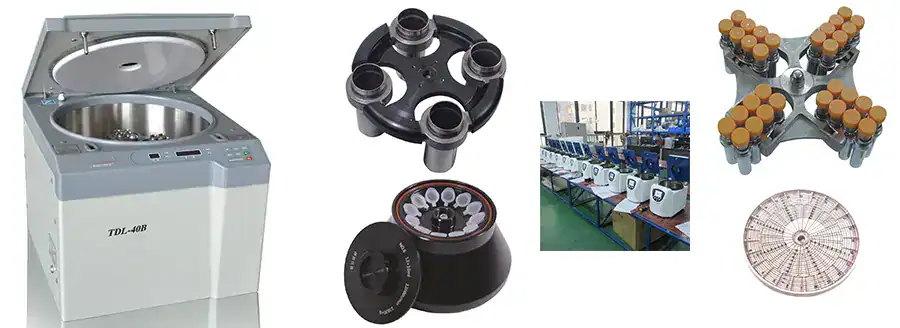
What Entry-Level Centrifuges Offer for Beginners
With respect to accessibility and ease of use, entry-level centrifuges provide beginners with a straightforward introduction to laboratory centrifugation Lab Alliance. These models feature intuitive controls and preset programs, reducing setup complexity and allowing users to focus on core tasks rather than technical adjustments.
Their compact design and relatively low cost make them accessible to small labs, educational institutions, or individuals seeking reliable performance without extensive investment. Entry-level centrifuges typically support basic sample volumes and speeds sufficient for routine separations, enabling users to gain practical experience efficiently.
When Advanced Centrifuges Make a Difference in Your Work
Advanced centrifuges enhance laboratory capabilities by offering higher speeds, greater sample capacity, and customizable settings. They become essential when work demands precision, flexibility, and efficiency beyond basic tasks. These machines empower users to push boundaries and maintain control over complex processes.
Key scenarios include:
- Processing large volumes without compromising speed.
- Handling diverse sample types with tailored protocols.
- Achieving reproducible results critical for advanced research.
- Integrating with automation systems to streamline workflows.
For professionals seeking freedom from limitations, advanced centrifuges provide the tools to innovate and adapt. Their versatility supports evolving projects and ambitious goals, making a tangible difference when standard equipment falls short.
Choosing such a centrifuge aligns with a commitment to excellence and the desire to explore new scientific frontiers.
Comparing Features: Speed, Capacity, and Control Options
Centrifuges vary markedly in speed, capacity, and control features, which directly impact their suitability for different laboratory tasks.
Entry-level models typically offer moderate speeds and limited capacity, sufficient for routine separations and small sample volumes.
Advanced centrifuges provide higher maximum speeds and larger rotor options to accommodate diverse sample sizes and complex protocols.
Control options also differ: basic units often feature manual settings and simple timers, while advanced systems incorporate programmable interfaces, digital displays, and automated acceleration and braking profiles.
These enhanced controls afford greater precision and repeatability.
Users prioritizing flexibility and efficiency may find advanced features advantageous, whereas those seeking straightforward operation with minimal setup may prefer entry-level devices.
Understanding these distinctions enables informed selection aligned with specific laboratory demands, balancing performance capabilities with operational freedom.

How Budget and Lab Needs Guide Your Centrifuge Choice
When selecting a centrifuge, budget constraints and specific laboratory requirements play a critical role in determining the appropriate model. Laboratories seeking freedom in workflow must balance cost with capability.
Entry-level centrifuges suit modest budgets and basic tasks, while advanced models offer versatility at a higher price. Key considerations include:
- Financial flexibility: Align spending with long-term lab goals.
- Application demands: Match centrifuge features to sample types and volumes.
- Space availability: make certain equipment fits the physical lab environment.
- Future growth: Anticipate evolving needs to avoid frequent replacements.
Tips for Upgrading From Entry-Level to Advanced Models
Frequently, laboratories encounter the need to enhance their equipment capabilities as research demands grow. When upgrading from entry-level to advanced centrifuge models, it is essential to assess specific requirements such as speed, capacity, and automation features. Users should prioritize models offering flexibility to accommodate diverse sample types and volumes.
Compatibility with existing lab infrastructure and software integration can streamline workflow and enhance freedom in experiment design. Additionally, evaluating maintenance needs and energy efficiency helps guarantee sustainable operation.
Training staff on new functionalities maximizes the investment and minimizes downtime. By focusing on these practical aspects, laboratories can migrate smoothly to advanced centrifuges that expand their research potential without unnecessary complexity or restrictions. This approach supports freedom in scientific exploration while optimizing resource use.
Conclusion
Choosing between entry-level and advanced centrifuges depends on the specific demands of the laboratory and the user’s experience. Entry-level models provide essential features suitable for beginners and routine tasks, while advanced centrifuges offer higher speed, greater capacity, and enhanced control options for complex applications. Budget considerations and workflow requirements play a pivotal role in decision-making. Ultimately, labs should assess their current and future needs to determine the most appropriate centrifuge, with the option to upgrade as expertise and demands evolve.